
My Modern Love Submission
Hi friends — I submitted this to Modern Love about a year ago and while it wasn’t picked up, it’s still a piece that means a lot to me. It’s about the relationship between sisters, and all the love, history, complexity, and tenderness that can exist there.
My sister asked that I not include her name or her children’s names, which I completely respect, but I wanted to share it here anyway because I have a feeling some of you might relate to it too.
Maybe it will resonate with some of you. 🤍
xoxo,
J
"Grief Pulled Us Apart as Sisters—Time and Love Brought Us Back Together”
My sister told me recently she had never been to a funeral.
We were having lunch, trading stories about our aging parents — their doctor visits, their sudden fragility — and the ways our own bodies were beginning to betray us in middle age. I was 43, she was 40, and somehow, we had made it this far without her ever saying this out loud.
“What about Grandma and Grandpa?” I asked, my words landing harder than I meant them to.
“I was in Europe,” she reminded me, as if I should have remembered.
She was right. She’d been living in London then, and Dad told her not to fly home. He didn’t want to inconvenience her. She could say goodbye from afar.
I thought back to standing at the podium at our grandfather’s funeral, eulogizing him and breaking down halfway through. It was simply a fact — she hadn’t been there. She has never been to the funeral. She has never been where I have been.
I was a month shy of my eighth birthday when our brother Ian died of pneumonia. He was three years old, born deaf and with Down syndrome, and I adored him. My sister was barely four and remembers almost nothing about him. I had learned sign language alongside him, sat through every doctor’s appointment, become his unofficial third parent. I was the one who knew which cry meant tired, which meant hungry, which meant scared.
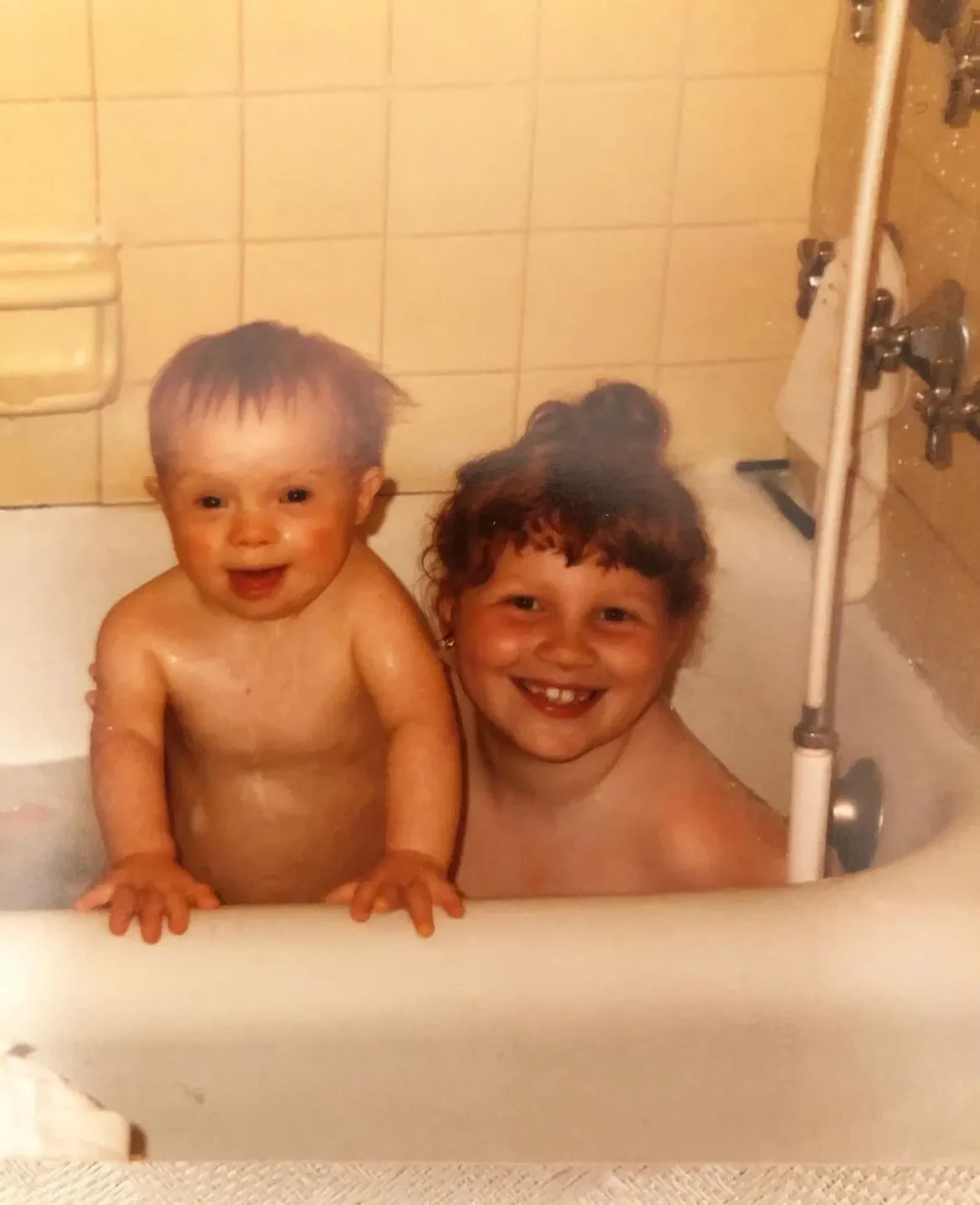
Me and Ian.
He died on a cold January morning before the sun was up. My father was out on a paper route, unreachable when the hospital called to tell us he’d passed. I sat in the living room with my mother and grandparents, waiting for my father to come home, while my two younger sisters, the youngest still an infant, slept upstairs, blissfully unaware.
When my dad finally walked through the door, I watched the news take the air out of him. He crumpled to his knees and let out a sound so raw it seemed to shake the whole house. That sound has lived in my bones ever since. I was the only sibling who heard it.
In the years that followed, I soaked up every tremor of our family’s grief — the slammed doors, the whispered arguments. My middle sister got the softer version of those years, grief’s sharpest edges blunted by the time she was old enough to notice.
By high school, the careful, obedient child who once tried to hold our family together was gone. I was starving, binging, getting arrested, testing every boundary I could find; all the grief I had swallowed as a child clawing its way out. My sister, meanwhile, moved through classes with ease, untouched by the storm. Even our looks told the story: my unruly red hair a live wire, hers a smooth brown current. It was as if we’d been made from different templates.
The gap between us widened. She didn’t know what to do with my anger, and I didn’t know how to explain it. I resented her for living in a lighter, easier version of our house, and she resented me for not being the fun, protective older sister she might have wanted. We weren’t just growing up in separate childhoods — we were growing apart entirely.
After high school, I went straight to an eating disorder clinic, then moved back home for a year, trying to figure out what came next. My sister went off to a prestigious business school and then moved to London for five years, building a career and a life an ocean away. While I stayed rooted in the soil where everything had first broken, she seemed to live a life unburdened by loss. Each promotion, each passport stamp felt like proof that she had escaped something I hadn’t.
When she moved back to the States for a job in Manhattan, our parents had divorced and the air in our family was heavy with fallout. Yet, somehow, she was thriving — a gorgeous Upper West Side apartment, a generous salary. I was sharing a Brooklyn apartment with three roommates, waitressing, hustling, trying to make life work. We lived in the same city but in opposite worlds.
We kept trying to meet for a “nice sister dinner,” but halfway through the conversation would always turn.
“You don’t get it,” I’d say, trying to explain things I’d been untangling in therapy. “You were overseas while everything was falling apart. I was here for all of it — the meltdowns, the fights.”
Her eyes cut into me, “Everything with you is so intense! Can’t we just have a normal dinner? Talk about movies or something fun?”
Her words felt like a slammed door. I wanted to tell her that intensity was the only way I knew how to survive, but instead both of us retreated into heavy silence. We split the check and went on to our separate lives.
During those years I offered to pay for therapy for the two of us — with money I didn’t have — but she could never find the time. My inbox is a graveyard of threads that begin with some version of let’s try to work this out and end with we can’t see eye to eye, so let’s drop it.
Her life moved forward in clean, consecutive steps — executive roles, marriage, a house in New England. Mine came slowly, unevenly. I clawed my way from waitressing to personal assistant to a corporate job, hustled through long nights and quick promotions, stumbled, got back up, kept going. By my mid-thirties, I’d finally landed somewhere stable. I was proud and surrounded by friends who had become my chosen family; people who saw me as hard-working and genuine and easy to love. More than once, they tilted their heads and asked gently, almost baffled, how someone like me — someone who cared so deeply — couldn’t seem to have a relationship with her own sister.
The question always lingered.
And yet, I still couldn’t have a real conversation with her. After nearly twenty years of trying, I had mostly accepted this was how things would always be — and, I think, so had she.
When I found out my sister was pregnant, I planned her baby shower, fussed over the details, did all the things sisters are supposed to do. No one outside our family would have guessed how distant we really were — I, forever an actress, and she, the consummate professional, always knew how to keep up appearances. But as I watched her open onesies and step into motherhood, I felt a profound sense of grief pour over me. It was as if I was watching not just her new life begin, but the final closing of our shared childhood; a childhood I’d spent years trying to rewrite, and one she’d long let go of.
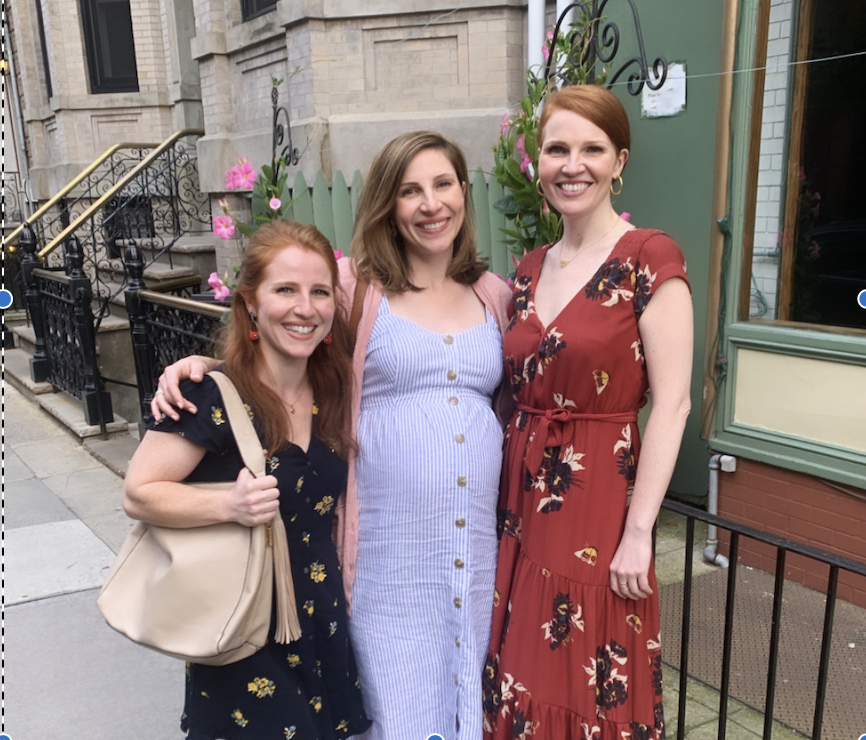
At my sister’s baby shower
In the months leading up to her due date, that sadness sat in my chest like a stone I couldn’t put down. I worried that her becoming a mother would only widen the gap between us, that she would slip even further into a world I couldn’t reach. And yet, beneath the heaviness, a small, stubborn hope kept rising, that this might be the thing to bring us back together and offer a rewrite of something that had felt unfinished for decades.
I carried that hope like a fragile flame — through baby store aisles, through sleepless nights, through months of waiting. I didn’t know exactly what I was waiting for, only that some part of it hinged on the birth of her baby.
In the summer of 2019, my sister placed her son in my arms, and I knew the answer I’d been waiting for had finally come. Right then, I felt as if every unspoken hurt between us dissolved in an instant. My nephew arrived with a shock of bright red hair — the exact shade of mine, the same shade our brother Ian had — and for a moment, the years collapsed like an accordion. I felt my nephew, my brother, my sister, and me all stitched together by an invisible thread, our hearts knitted together across decades of silence and loss. There was no mistaking it — my nephew belonged to all of us.
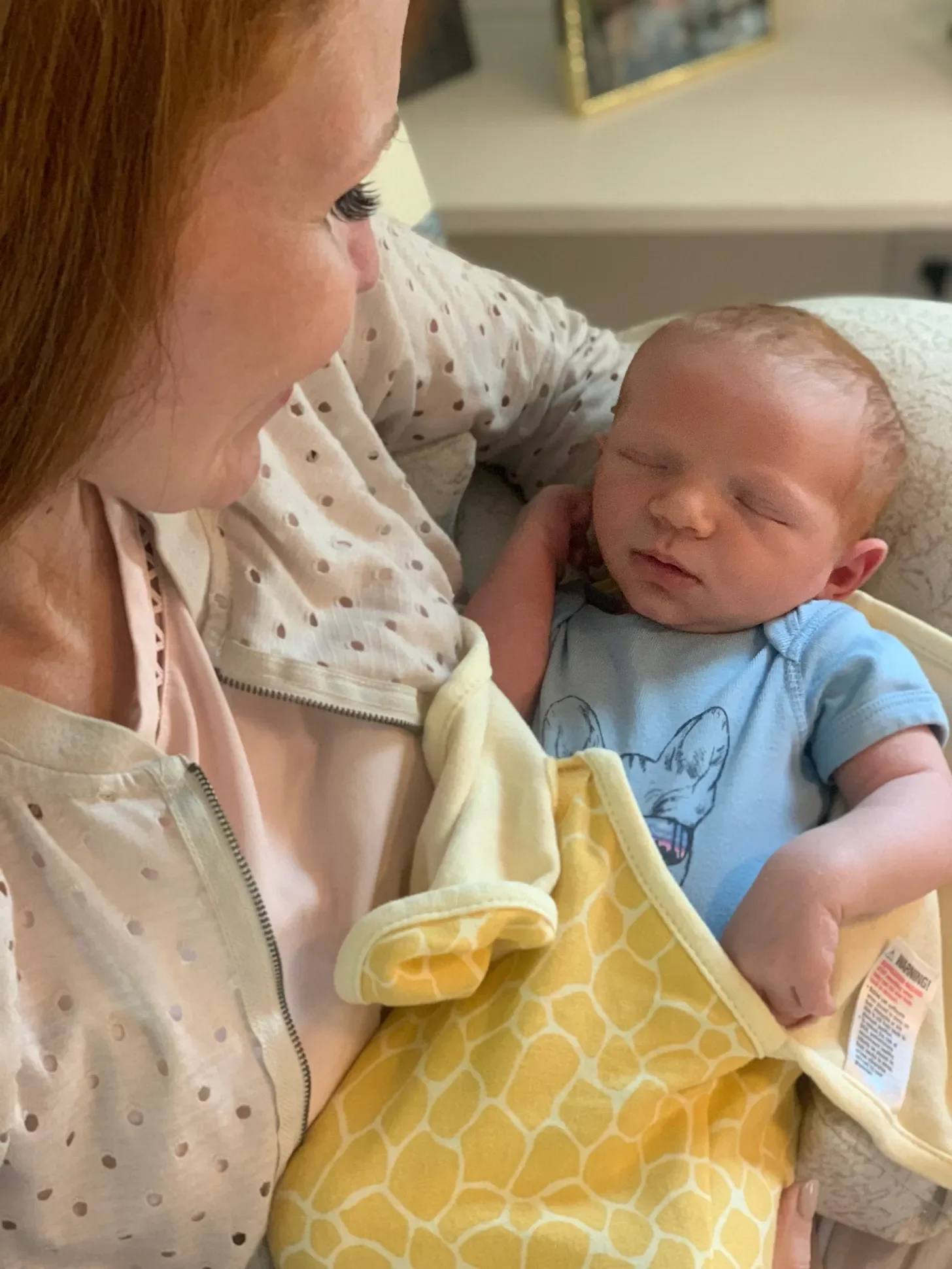
Meeting my nephew.
My sister saw how fiercely I loved my nephew — how my heart, which had bolted shut the morning our brother died, now swung open wide. She could see exactly what she had missed all those years ago, but there was no bitterness. Instead, she stepped back and let me pour myself into him, let me draw from a well that had been waiting for decades.
Fourteen months later, when my niece was born, I felt the edges inside me dissolve again. The tenderness of being the oldest sibling returned to me like a language I thought I’d forgotten; my body remembering before my mind could catch up.
And as she watched me be a loving aunt to my niece and nephew, I got to watch her transform into a loving mother, gentle in ways I’d never known her to be. The matter-of-fact businesswoman I’d always seen seemed to disappear around her children, replaced by someone who sang, who knelt on the floor, who lingered. She was patient where I’d always known her to be brisk, unhurried where I had once seen her rushing ahead.
It felt, for the first time, like we were both becoming the people we had always wished the other could be — and perhaps the people we had secretly longed to be around each other. Slowly, the years that had weighed on us loosened, reluctant at first, then falling away. For the first time, we sat side by side in a silence that felt full rather than empty, a quiet knowing passing between us — the kind that only belongs to people who share a history.
Our lives had bent in opposite directions after our brother died, carving us into two very different women. But the same blood has always run through us, carrying the same grief like a current. I will always be the one who digs, and she will always be the one who moves forward — but we have stopped asking the other to do it differently.
We are no longer girls, but the women grief made us — tempered and scarred, but softened in surprising places. And we are, after everything, still, finally, sisters.
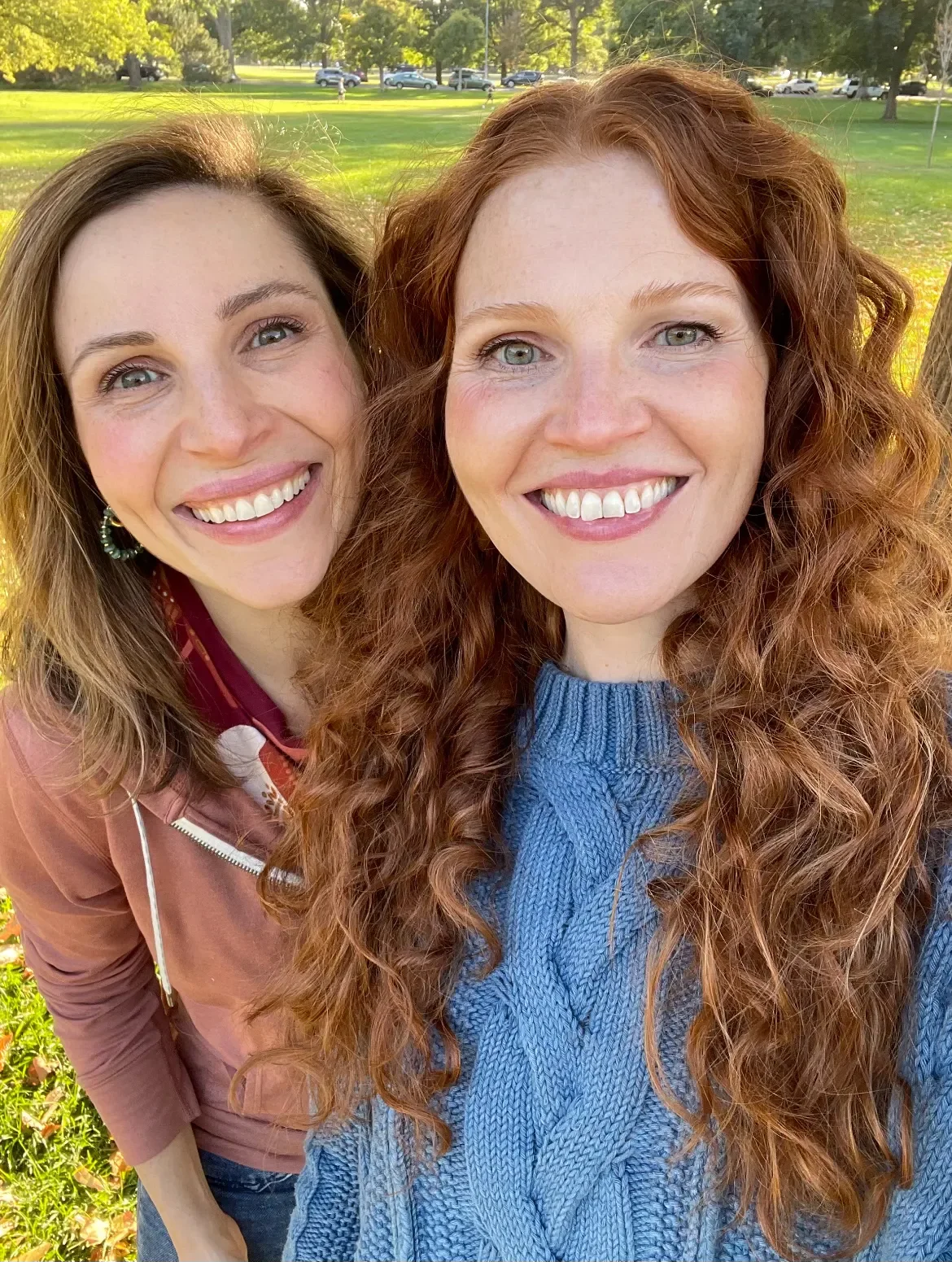
My sister and me in 2024